Collector cars: what really drives their value
By Thomas Hermet · October 22, 2026 · 5 min read
Rarity, racing history, originality, famous owners and nostalgia: why a Citroën 2CV fetches $14,500 and a Ferrari 250 GTO more than $50 million.
From $11,000 to €135 million
A 1926 Ford Model T coupe, mechanically refreshed, sold for $11,000 at auction in September 2026. Nearly a century old, a fixture in every history of the automobile, and yet priced like a used city car. At the other end of the scale, the 1955 Mercedes-Benz 300 SLR Uhlenhaut Coupé sold for €135 million in May 2022, at an invitation-only sale held at the Mercedes-Benz Museum in Stuttgart. At the time, no car had ever sold for more.
Age alone, then, does not create value. What separates those two cars comes down to a handful of criteria that collectors weigh carefully: how many were built, racing history, condition and originality, who owned the car before and, more quietly, the nostalgia of a generation of buyers. None is enough on its own; records happen when several pile up.
Rarity, the first engine of value
More than 15 million Model Ts were built. The 300 SLR Uhlenhaut was built twice. Derived from the 300 SLR racing car, the two coupés are named after engineer Rudolf Uhlenhaut, who used one of them to get around; Mercedes kept the other in its own collection. The whole market plays out between mass production and the near one-off.
The great people's cars of the last century, built by the million, remain affordable: a grey 1959 Citroën 2CV with a blue soft top sold for $14,500 at an online auction in July 2026. There are still plenty around, parts are easy to find and a hesitant buyer can always wait for the next one. But rarity can hide in a detail. A 1952 Volkswagen Beetle 'Zwitter', from a short transition series built in 1952 and 1953 that kept the split rear window, reached $102,000 in October 2026. For marque specialists, that divided pane is enough to turn a people's car into a museum piece.
When production itself is tiny, prices move to another scale. The Toyota 2000GT, a coupé built in roughly 350 units, sold for $995,000 in December 2025. Its story also shows that rarity does not always make a legend on its own: the car had to be desirable, beautiful or significant in its day. The 2000GT was all of that, and this one had belonged to racing driver Bobby Rahal.
Racing history: a win never fades
With rarity being equal, a car that won is worth far more than a car that merely raced. The Jaguar D-Type XKD 501, winner of the 1956 Le Mans 24 Hours for the Scottish team Ecurie Ecosse, sold for $21,780,000 at Monterey in August 2016. It is not the model that commands that price, but this exact chassis and its documented history: every race, every driver, every repair.
The Ferrari 250 GTO remains the most famous example. Only 36 were built, and it combines rarity, beauty, a 3-litre V12 and a racing career. Chassis 3765, entered at Le Mans in 1962 and second at the Nürburgring 1000 km that same year, sold for $51,705,000 in November 2023. For many collectors, the GTO stands for an era when a car that could win races could still be driven on the road, and that blend is exactly what makes it so coveted.
Condition, originality and matching numbers
Two cars of the same model can be worth very different sums depending on their condition and authenticity. Collectors look for 'matching numbers' cars, whose engine, gearbox and chassis still carry the original numbers recorded when they left the factory. Manufacturer certificates also reassure buyers: the 1971 Ferrari 365 GTB/4 'Daytona' that sold for $865,000 in August 2026 was certified by Ferrari Classiche, the factory department that verifies the authenticity of older Ferraris.
Mileage matters a great deal. The 1989 Lamborghini Countach 25th Anniversary, the final evolution of the model, showed just 379 km on the clock when it reached $938,000 in July 2026. The 1995 McLaren F1 that sold for $20,465,000 at Pebble Beach in August 2021 had covered fewer than 400. Designed by Gordon Murray, with a BMW V12 and a central driving seat, the F1 was built in just 106 examples across all versions.
Yet originality can beat shine. The 1961 Ferrari 250 GT SWB California Spider, found under a shelter in the Baillon collection, was sold as found, unrestored: €16,288,000 at Artcurial's Rétromobile sale in February 2015. For a car with that provenance, a restoration would have erased part of the very history bidders were paying for.
Famous owners and the silver screen
A car that belonged to a celebrity, or starred on screen, moves into a different category. The Baillon California Spider had once belonged to Alain Delon. The Ford Mustang GT from 'Bullitt', driven by Steve McQueen in the film's famous 1968 car chase, reached $3,700,000 in January 2020. It had led an ordinary life as a family car before being put away from 1980. Without its film role, a Mustang of that era is worth a tiny fraction of that sum.
The Aston Martin DB5 'James Bond', fitted with Q-Branch gadgets as seen in 'Goldfinger' and bought by Eon Productions to promote 'Thunderball', sold for $6,385,000 at Monterey in August 2019. Here again, the story the car carries matters more than the car itself. Buyers are paying to own a piece of popular culture.
Nostalgia, a generational engine
The market largely follows the memories of those with the age and the means to buy. The cars that hung on teenage bedroom walls in the 1980s now draw buyers who grew up with them. A 1987 Ferrari Testarossa, the icon of 'Miami Vice', sold for $202,222 in September 2026 with about 22,000 miles on the clock. By contrast, the $11,000 Model T is a reminder that a car nobody remembers driving loses some of its pull.
Japanese performance cars of the 1990s are riding that wave, helped by an American rule: in the United States, a car never certified for the local market can be imported once it is 25 years old. That is how a 1995 Nissan Skyline GT-R R33, right-hand drive and built for the Japanese market, found a buyer at $68,500 in October 2026. Every year, a new generation of models becomes eligible, and a new generation of buyers enters the market.
Between a $14,500 2CV and a Ferrari worth more than $50 million, can you put each car in its place? The daily challenge puts you to the test every day, and the cars aisle gathers every vehicle in the catalogue.
Objects in this guide
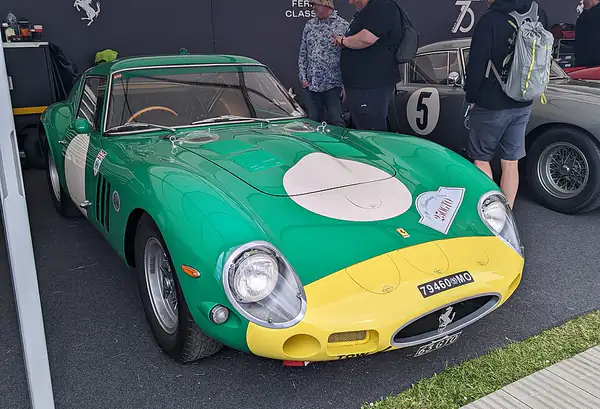
Ferrari 250 GTO (1962, chassis 3765) Luxury?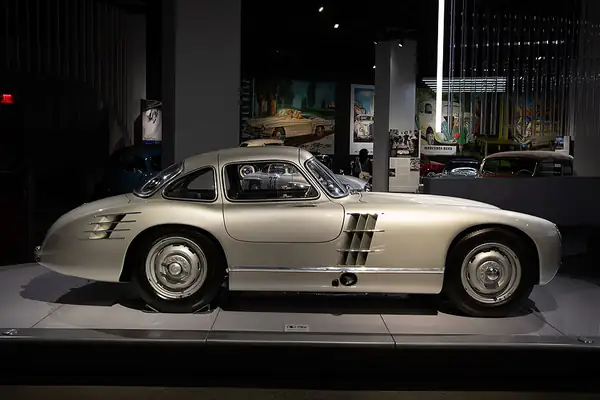
Mercedes-Benz 300 SLR Uhlenhaut Coupé (1955) Priceless?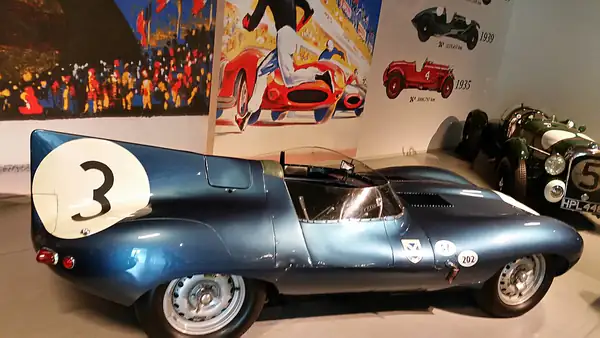
Jaguar D-Type XKD 501 (1955) Luxury?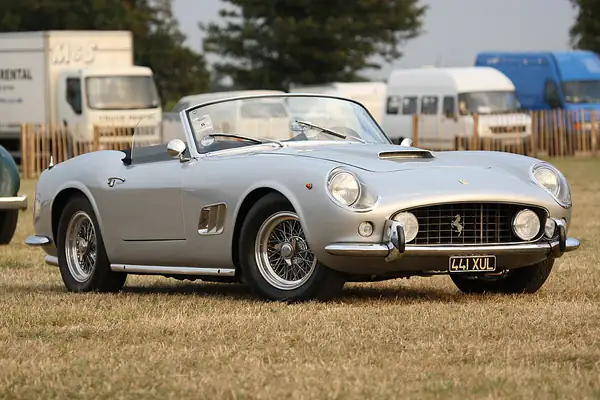
Ferrari 250 GT SWB California Spider (1961, ex-Alain Delon) Luxury?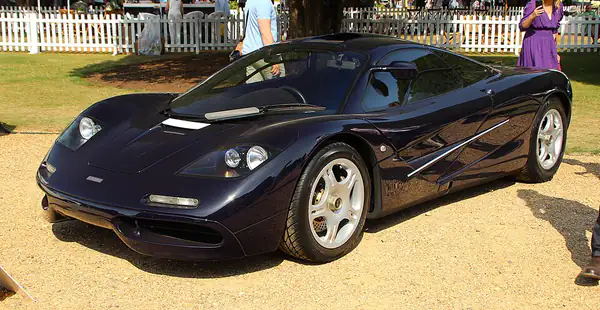
McLaren F1 (1995) Luxury?
The Ford Mustang GT from the film "Bullitt" (1968) Luxury?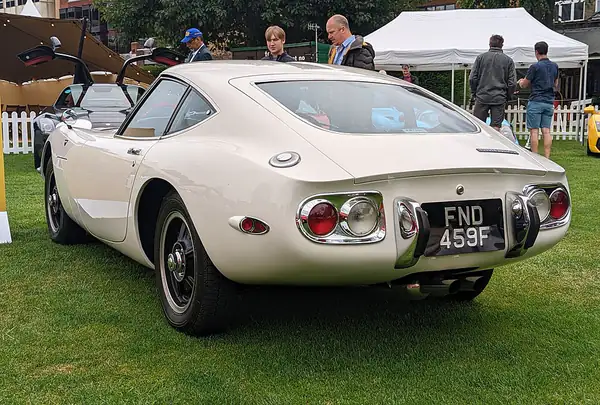
Toyota 2000GT (1967) High-end?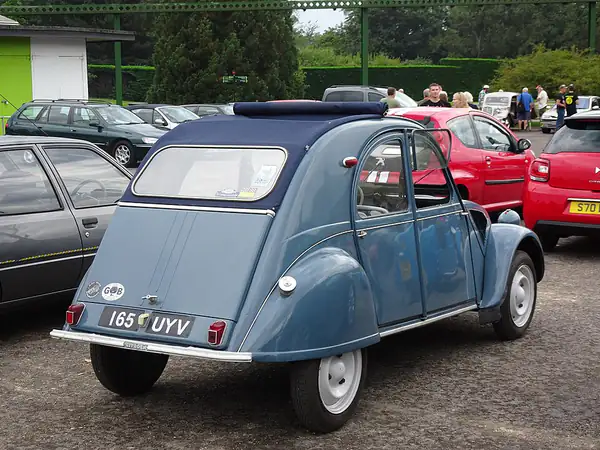
Citroën 2CV (1959) High-end?