When territories were for sale: Louisiana, Alaska and more
By Thomas Hermet · October 22, 2026 · 5 min read
Louisiana, Alaska, the Danish West Indies: three territories sold like property, the story behind each deal, and what those prices really mean today.
Borders with a price tag
We tend to think of borders as drawn by wars, royal marriages and peace treaties. Sometimes, though, they were settled with a cheque. The PriceGuessr catalogue includes three of these extraordinary deals, all with the United States as the buyer: French Louisiana in 1803, Russian Alaska in 1867 and the Danish West Indies in 1917. Three sellers, three very different situations, and one shared logic: for a state, a distant possession can turn into a burden rather than a treasure, and selling it can look wiser than risking its loss.
One caveat before we start. These prices are accurate, but they cannot be naively compared with today's: an 1803 dollar is not a 2026 dollar, and a young country of a few million people does not reason like a superpower. We will come back to that.
Louisiana, 1803: Napoleon clears out an empire
In 1800, under a secret treaty, Spain handed Louisiana back to France. Bonaparte was dreaming of a French empire in the Americas, anchored on Saint-Domingue, the richest sugar colony in the Caribbean. The dream collapsed fast. The expedition sent to restore French rule there was destroyed by Haitian resistance and yellow fever, and war with Britain was about to resume. Without Saint-Domingue, Louisiana lost its purpose, and France had no means of defending it against the Royal Navy.
President Jefferson's envoys, Robert Livingston and James Monroe, had come to Paris hoping to buy New Orleans and secure access to the Mississippi. They were offered the whole territory instead. The April 1803 treaty set the price of Louisiana at $15,000,000, part of it in the form of Washington taking over American citizens' claims against France. The deal was financed with loans from British and Dutch banks. In return, the United States received about 828,000 square miles, covering all or part of fifteen present-day states and doubling the size of the country.
It is worth being precise about what was actually sold. France was ceding a claim to a vast territory largely inhabited by Native American nations, who had not been consulted. For the United States, the purchase opened a century of exploration, starting with the Lewis and Clark expedition, but also of imposed treaties and wars.
Alaska, 1867: Russia lets go of a colony too far away
Sixty-four years later, it was Russia's turn to sell. Weakened by the Crimean War, it ran in Alaska a huge, thinly populated colony whose fur trade was in decline, and which it could not have defended if Britain, next door in Canada, had decided to seize it. Tsar Alexander II preferred to sell to a power he saw as less of a threat.
On the American side, Secretary of State William Seward negotiated the treaty, signed in March 1867. The price of Alaska was set at $7,200,000 for about 586,000 square miles. Some of the public mocked the frozen expanse as “Seward's Folly”. That verdict has aged badly: gold rushes in the late 19th century and the discovery of oil at Prudhoe Bay in 1968 transformed how the territory was seen, and it became the 49th state in 1959. As with Louisiana, Alaska's Indigenous peoples were not party to the deal.
The Danish West Indies, 1917: a sale driven by war
The third deal was by far the most expensive, for by far the smallest territory. St. Thomas, St. John and St. Croix, about 135 square miles in all, had been Denmark's Caribbean colony since the 18th century. St. Croix had itself been bought from France by the Danish West India Company in 1733. The sugar economy, built on slavery until its abolition in 1848, had declined, and Copenhagen had long wanted out. Washington was interested too: a first agreement negotiated under Seward back in 1867 was never ratified by the US Senate, and a second, in the early 20th century, was rejected by the Danish upper house.
The First World War changed everything. The Panama Canal had opened in 1914, and the United States feared Germany might establish itself in islands that commanded the Caribbean sea lanes. A treaty was signed in 1916 and approved by referendum in Denmark, and the Danish West Indies passed to the United States in March 1917 for $25,000,000 paid in gold, days before America entered the war. They became the United States Virgin Islands. As part of the same settlement, Washington declared it would not object to Denmark extending its political and economic interests to the whole of Greenland. As for the canal, ships paid tolls by tonnage; in 1928 the writer Richard Halliburton swam it and was charged 36 cents.
What those prices would mean today
It is tempting to convert. Be careful: US consumer price indices suggest prices have risen by a factor of roughly twenty to thirty since each of these dates, which would put each purchase somewhere in the low hundreds of millions of today's dollars. That is an order of magnitude at best, and a misleading one: those indices track the cost of a basket of consumer goods, not the weight of public spending in a far smaller economy. For the young republic of 1803, $15 million was such a stretch that it had to borrow abroad.
A more telling comparison is price per area. Louisiana came to roughly $7 per square kilometre, Alaska to under $5. The Danish West Indies cost more than $70,000 per square kilometre, more than ten thousand times the rate for Alaska. A sheltered harbour, a strategic location, people and towns: what a territory is worth depends on what it lets you do, not just on its size. For reference, a hectare of French arable land averaged €6,400 in 2024, or €640,000 per square kilometre. In today's money, any French field is worth far more per square kilometre than those islands fetched in 1917.
Buying an island is not buying a country
States hardly sell territory any more, but land still changes hands, sometimes spectacularly. In 2002 the residents of the Isle of Gigha, off Scotland's west coast, bought it for £4,000,000 with the help of public funding; they have celebrated 15 March as “independence day” ever since. In 2018 the local community acquired the Isle of Ulva for £4,650,000. In 1969 the millionaire Jack Hayward bought Lundy for £150,000 and promptly gave it to the National Trust, and in 1979 a 28-year-old Richard Branson bought Necker Island for $180,000. In 2012 an entire town in Wyoming, Buford, went under the hammer for $900,000.
The difference from 1803, 1867 or 1917 is fundamental: these buyers acquired land, not sovereignty. Gigha's independence is a celebration, not a status, and the island remains Scottish. Ceding a country means handing over the power to make laws, levy taxes and defend borders, something no title deed can do.
To put these orders of magnitude to the test, the daily challenge mixes everyday objects, property and historical curiosities every day.
Objects in this guide
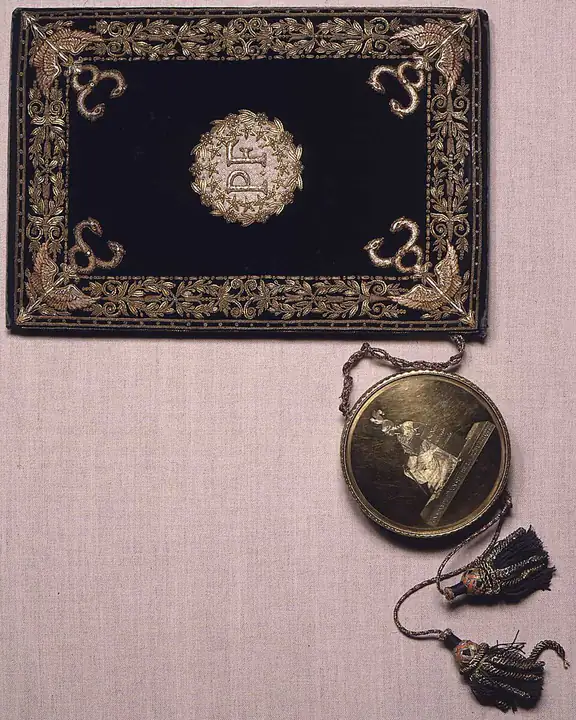
French Louisiana (sold to the United States, 1803) Luxury?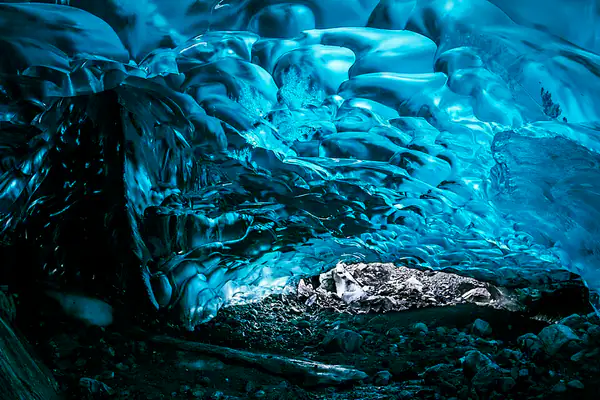
Alaska (purchased from Russia, 1867) Luxury?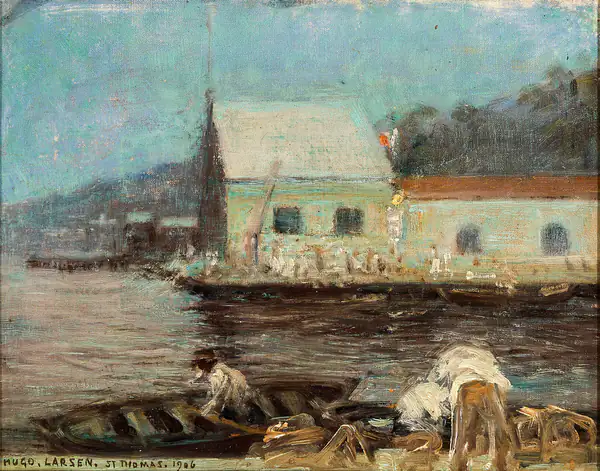
Danish West Indies (sold to the United States, 1917) Luxury?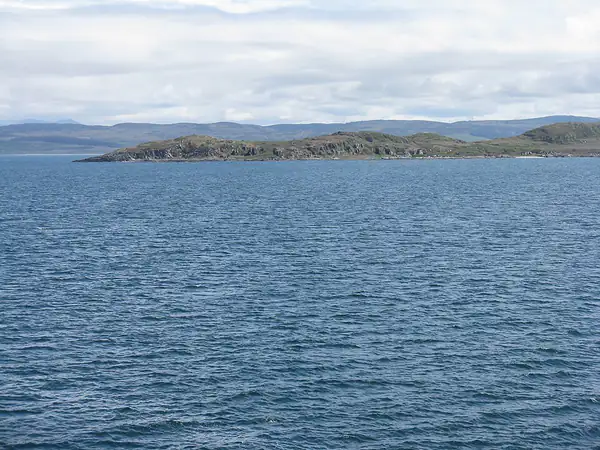
Isle of Gigha (Scotland), bought by its residents Luxury?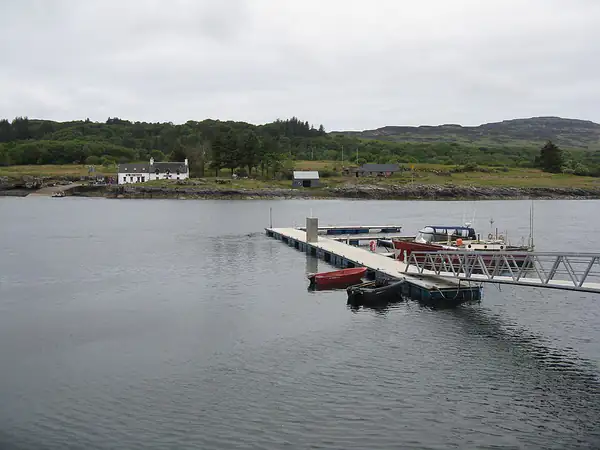
Isle of Ulva (Inner Hebrides, Scotland) Luxury?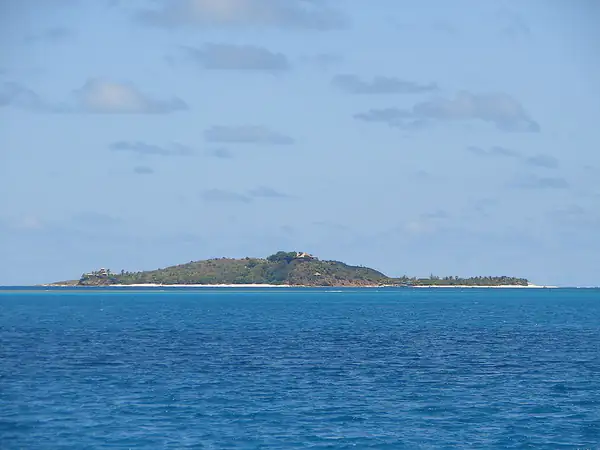
Necker Island (British Virgin Islands), bought by Richard Branson High-end?
Buford, Wyoming: an entire town (2012 sale) High-end?