How to guess a price without being wildly off
By Thomas Hermet · October 22, 2026 · 6 min read
Orders of magnitude, reliable anchors, clues worth reading, currency and inflation traps: a practical method for estimating any price without being 10x off.
Think in orders of magnitude before you think in euros
Faced with an unfamiliar object, most people blurt out a precise figure straight away. That is getting ahead of yourself. The first question is not “how much?” but “which floor of the building?” Prices live on a ladder of powers of ten: a few euros, a few tens, a few hundreds, a few thousands, and so on up to hundreds of millions. The PriceGuessr catalogue spans the whole ladder, from a kiwi at €0.94 to the Salvator Mundi, sold for $450,312,500 in 2017. That is almost nine rungs apart. Landing on the right rung is most of the job; fine-tuning comes afterwards.
The most reliable technique is bracketing. Does an Opinel No. 8 knife cost more than €10? Probably: it is made in Savoie, with a wooden handle and a locking collar. More than €100? Surely not, it is a popular pocket knife. So you are between 10 and 100, and by leaning towards the bottom of that range you land close to the real figure: €11.70 on the official French store in 2026. Bracketing beats raw gut feeling because it forces you to ask what would be clearly too low and clearly too high.
Relative error is the only error that matters
Is being €10 off a big deal? It depends entirely on the object. On that €0.94 kiwi, guessing €10.94 means you are out by a factor of eleven, which is absurd. On an apartment in Paris's 7th arrondissement, where the median sale price reached €764,750 in 2025, the same €10 is a rounding error. Absolute gaps mean nothing across scales. What counts is the ratio between your guess and the true price.
That is why being off by a factor of two weighs the same everywhere. Saying €2 for a €1 item, or €2 million for a €1 million item, is exactly the same mistake: you doubled it. Human perception works this way too. The Weber-Fechner law in psychophysics describes how we sense differences proportionally rather than absolutely. PriceGuessr scores on the same principle: your points depend on the ratio between your answer and the price, symmetrically. Getting within 10% earns about 4,130 points out of 5,000; being off by a factor of two, too high or too low, drops you to 1,250; a factor of ten leaves you with barely fifty.
In practice, this means every cent matters proportionally on cheap items, while on expensive ones a miss of tens of thousands of euros can still be an excellent answer. Guessing €700,000 for the Paris apartment is a very good round; guessing €3 for the kiwi is a poor one, even though you were “only” two euros out.
Anchor on prices you genuinely know
Nobody estimates from a blank slate. We lean on reference points, and the best ones are prices we pay regularly. A kilo of baguette bread cost €4.11 on average in France in August 2026, according to the national statistics office Insee. A baguette weighs about 250 g, which puts it at roughly one euro. From there, the 1.9 kg Poilâne loaf, sold for €14.44 in 2026, becomes guessable: per kilo it works out at about €7.60, a little under twice the price of everyday bread. Sourdough, a wood-fired oven and a famous name all cost extra, but not outrageously so.
Anchoring has a dark side, though. In the 1970s, Amos Tversky and Daniel Kahneman showed that a number seen just before making an estimate pulls the answer towards it, even when it has nothing to do with the question. So pick your anchor deliberately rather than letting one pick you: ask which familiar object is closest to the one in front of you in function, size and market tier, and start from there instead of from the last figure you happened to see.
Reading the clues: material, brand, country, sales channel
Watches make a perfect case study. A resin Casio F-91W costs €19.90 in store; a steel Rolex Submariner lists at €9,800 in France; a white-gold Patek Philippe Calatrava at €35,100. All three tell the time. Between the first and the last the ratio is more than 1,700. Materials, movement (quartz or mechanical) and above all the brand account for nearly all of that gap.
How the item is sold matters just as much. A shop sets a price; an auction lets buyers set it among themselves, with no ceiling. The Patek Philippe Nautilus “Tiffany”, a steel watch made in an edition of 170, fetched $6,503,500 at Phillips in December 2021. At the other end, a 1959 Citroën 2CV sold for $14,500 in an online auction in 2026, less than a new Renault Clio 6 listed at €19,900. “Auction” does not mean “fortune”; it means the price depends on how hungry the bidders in the room happen to be that day.
Then there is geography. The average price of a hectare of arable land was €6,400 in France in 2024, against €96,608 in the Netherlands that year and €268,649 in Malta in 2023. Same statistic, same unit, and a ratio of more than forty between the extremes. On a small, crowded archipelago, every plot is contested, and the price shows it.
Currency and time traps
Big numbers impress, so check the unit first. The bluefin tuna from the 2026 New Year auction at Toyosu went for ¥510,300,000. Over half a billion! Except that one euro is worth well over a hundred yen, so this 230-plus kilo fish comes to something in the order of €3 million. Crazy money for a tuna, yet more than a hundred times less than the raw figure suggests at a glance. The same reflex applies to the Game Boy, launched in Japan in 1989 at ¥12,500: it looks enormous for a handheld console, and it isn't.
Time is the other trap. An old price is expressed in money that was worth far more. When Elvis Presley bought Graceland in 1957, he paid $102,500 for a mansion on 5.6 hectares in Memphis. That sounds like pocket change, but US consumer prices have risen more than tenfold since, and property has followed its own, steeper path. Likewise, the original iPhone launched at $599 in 2007; comparing that with an iPhone 17 Pro at €1,329 in 2025 means accounting for both inflation and a change of currency.
One last trap: the symbolic price. A house to renovate in Mussomeli, Sicily, was listed at €1 in 2024. The figure is real, but it does not measure the property's worth: it is a municipal scheme against depopulation, with a refundable deposit and a renovation obligation attached. When a price looks absurd, look for the rule that explains it.
A four-step method
To sum up. First, find the rung: a few euros, a few hundred, a few million? Second, choose a familiar anchor, as close to the object as possible. Third, adjust with the clues: material, brand, era, country, shop or auction. Fourth, check the unit: currency, date, and exactly what the price covers. That last step is often skipped: a set of six Duralex glasses at €15.30 is not the same thing as a single glass.
If you are torn between two values, split the difference by multiplying, not by adding. Between 100 and 10,000, the sensible middle is 1,000, not 5,050. That is the geometric mean, and it is the guess that best protects you from a huge miss in either direction.
Nothing sharpens these instincts like practice. The daily challenge serves up a fresh set of real objects to price every day: a good way to put the method to work and find your blind spots.
Objects in this guide
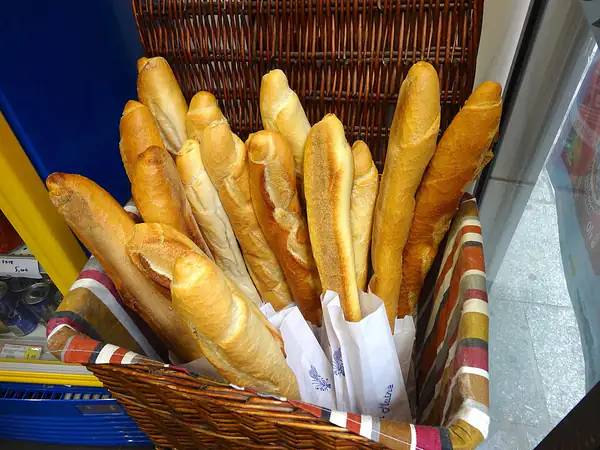
One kilo of baguette bread (France) Bargain?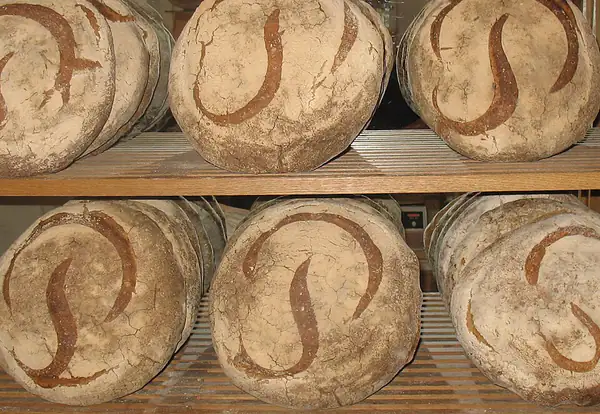
Whole Poilâne miche loaf (1.9 kg) Bargain?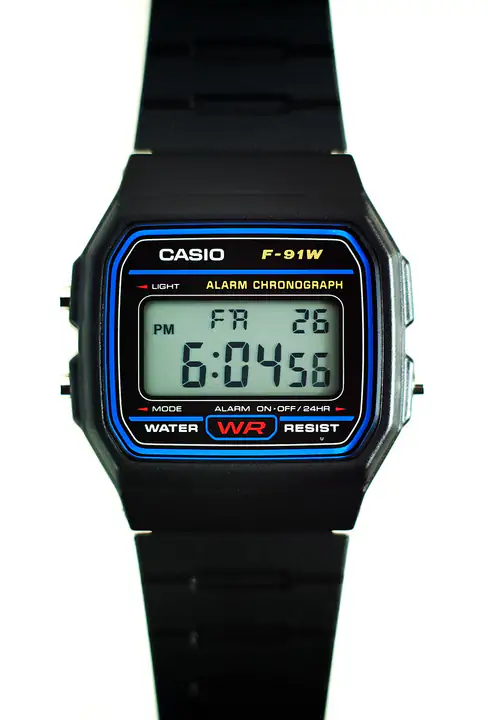
Casio F-91W watch Bargain?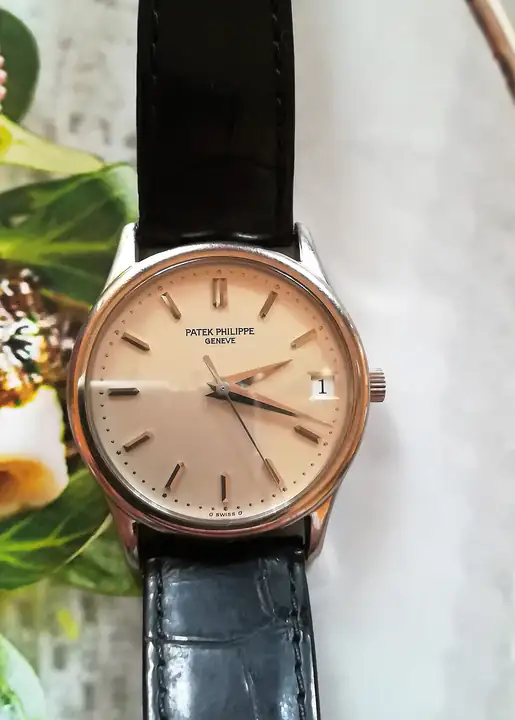
Patek Philippe Calatrava 6119G watch High-end?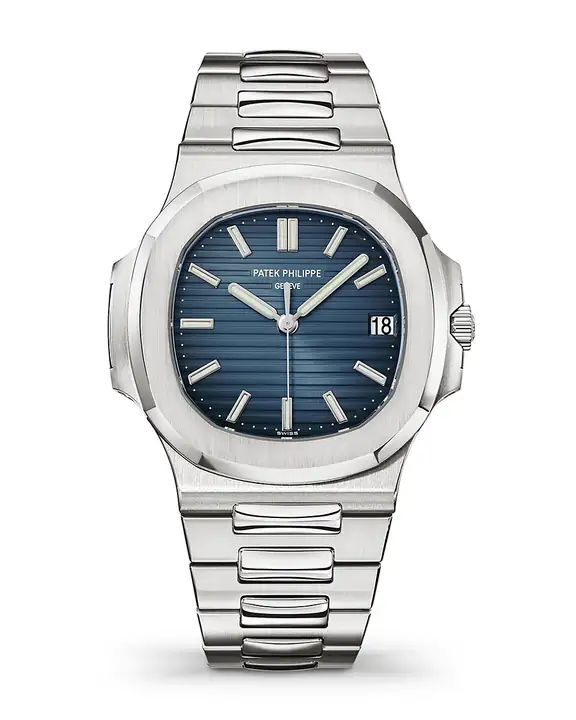
Patek Philippe Nautilus 5711/1A-018 'Tiffany' Luxury?
Average price of one hectare of arable land in Malta (2023) High-end?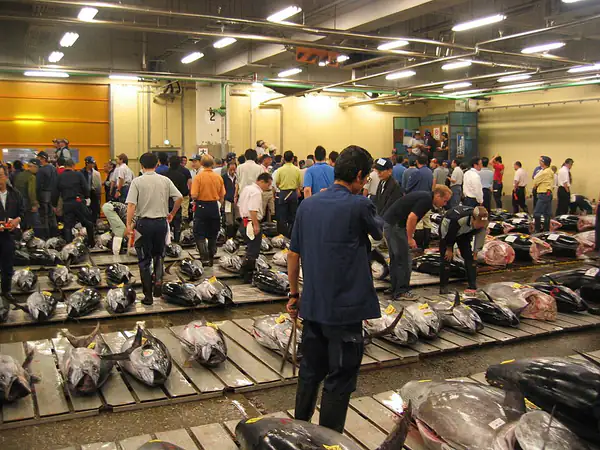
Bluefin tuna from the year's first auction at Toyosu (Tokyo, 2026) Luxury?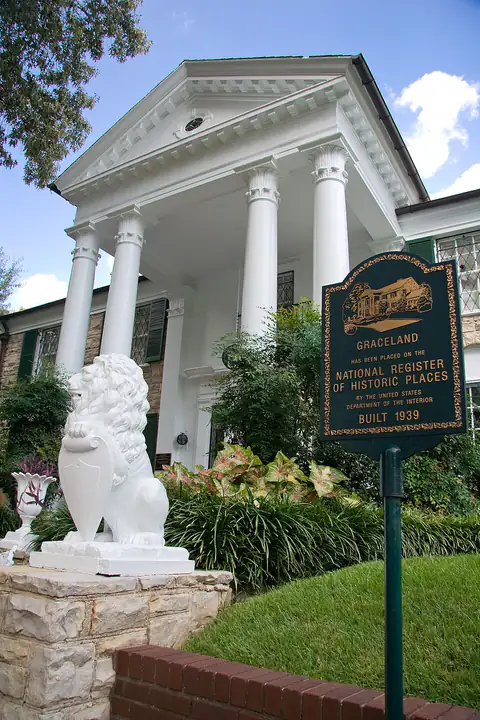
Graceland (bought by Elvis Presley, 1957) High-end?