Watches, bags and jewels: why luxury costs what it costs
By Thomas Hermet · October 22, 2026 · 5 min read
Rolex, Hermès, Patek Philippe: craftsmanship, engineered scarcity, waiting lists and resale premiums. What really sets luxury prices, with real figures.
Telling the time, from €19.90 to €35,100
A Casio F-91W costs €19.90 on the brand's official French store in October 2026. It keeps time to the second, wakes you up, lights up in the dark and runs for years on one battery. A white gold Patek Philippe Calatrava 6119G, listed at €35,100 in French boutiques that same month, does exactly the same job, and if anything a little less accurately. That is a ratio of more than 1,700 to one for the same function.
That gap sums up the question hanging over the whole luxury aisle: what are you actually buying when you pay ten, a hundred or a thousand times the price of the useful version? The answer comes down to a handful of ingredients, always the same ones, mixed in different proportions by each house: human labour, a brand, carefully maintained scarcity, precious materials and, more and more often, the prospect of selling it on.
Craftsmanship, the most visible part of the bill
Start with what you can see under a loupe. The Calatrava houses a hand-wound mechanical movement: an assembly of tiny parts, machined, decorated, fitted and regulated by watchmakers, where the Casio relies on a quartz crystal and a circuit made by the million. Its 39 mm case is white gold, a metal that has to be bought, cast, machined and polished. Skilled hours and the years of training behind them end up in the price.
The Omega Speedmaster Moonwatch Professional, sold for €8,800 in France in October 2026, shows another side of craftsmanship: proven reliability. This 42 mm mechanical chronograph is the model worn on the Apollo missions, and Omega has been telling that story for more than half a century. You are paying for a well-built object, and for historical proof that it is one.
Leather works the same way. A bag from a major house is largely hand-stitched from hides that are sorted, with any showing the slightest flaw set aside. That work is real and it is expensive. But it only explains part of the gap: a gifted leatherworker without a famous name will sell a bag of comparable quality for a fraction of the price. The rest is something else.
The power of a name
Economists call it pricing power: a company's ability to raise prices without losing customers. In luxury it reaches its peak, because the high price is itself part of what you are buying. A large Cartier Tank Must in steel with a quartz movement costs €3,850 in a French boutique. There is nothing remarkable about its mechanism; what it carries is a rectangular silhouette dating back to 1917 that people recognise at a glance.
Same story with Christian Louboutin Kate 100 pumps, £725 at a London department store in October 2026. The red sole works as a signature anyone can spot across a room, and it accounts for most of the difference with an unbranded patent pump. The Burberry cashmere scarf, €525 on the French online store, sells its check pattern, created in the 1920s, as much as the softness of its fibres.
Perhaps the clearest demonstration of what a name is worth is the MoonSwatch 'Mission to the Moon'. Launched in 2022 by Swatch and Omega, two brands from the same group, it borrows the Speedmaster's look in a Bioceramic case with a quartz movement, for €290. That is thirty times cheaper than the original, and yet it was desirable enough to cause queues outside shops when it came out. The design and the legend were worth something on their own; the mechanical movement and finishing of the original account for the rest.
Scarcity by design, and the waiting list
A luxury house could often make more. It chooses not to, or releases its products a trickle at a time. The no-date Rolex Submariner, reference 124060, has a French list price of €9,800 in October 2026. On paper, anyone can buy one at that price. In practice, the brand's steel sports models have for years come with waiting lists at authorised dealers, who tend to save them for their most loyal clients.
Hermès shows the same restraint with the Birkin, which you rarely buy by simply walking into a store. The frustration is no accident: it turns a purchase into a privilege, keeps desire alive and protects the brand from becoming ordinary.
Scarcity can also be announced loudly. The Patek Philippe Nautilus 5711/1A-018 'Tiffany', a limited run of 170 pieces with a Tiffany-blue dial, came out the year Patek Philippe retired the 5711 reference. The first example sold for $6,503,500 at Phillips in New York in December 2021. For a steel watch.
When second-hand beats brand new
Waiting lists have a mechanical effect: people who will not wait turn to the secondary market and pay a premium there. During the frenzy of the early 2020s, some steel watches were flipped well above list price the moment they left the shop. Those premiums later melted away for a number of models, a reminder that luxury is never a guaranteed investment.
At the very top of the market, the object alone no longer sets the price; its story does. Paul Newman's own Rolex Daytona, a gift from Joanne Woodward engraved 'Drive Carefully Me' on the caseback, sold for $17,752,500 at Phillips in New York in October 2017. The same model without that owner is worth a small fraction of that.
Handbags follow the same curve. The 2014 Birkin 30 'Himalaya', in matte white Nile crocodile with 18-carat white gold hardware set with 205 diamonds, reached HK$2,940,000 at Christie's in May 2017. Then in July 2025, the very first Birkin, the prototype made for Jane Birkin, sold for €8,582,500 at Sotheby's in Paris: a well-used black leather bag engraved with her initials, worth almost entirely what its owner made it worth.
Gold, gemstones and price tags that keep climbing
Then there is the material itself. Part of the price of gold jewellery or a gold watch tracks the market for precious metals, which has risen sharply in recent years, with gold hitting all-time highs in 2025. The big houses pass those increases on, and most revise their prices regularly: Rolex, for instance, adjusts its list prices almost every year.
With exceptional stones, scarcity is geological before it is commercial. The Wittelsbach blue diamond, 35.56 carats and a former Bavarian crown jewel, sold for £16,400,000 in December 2008 to jeweller Laurence Graff. No house can manufacture another historic blue diamond of that size: it is the very definition of limited supply.
History also shows that technology can turn prices upside down. In December 1969 the Seiko Quartz Astron, the first commercial quartz wristwatch, sold for ¥450,000 in Tokyo, in an 18-carat gold case. Twenty years later, in 1989, Casio launched the F-91W with a quartz movement that cost next to nothing. Luxury watchmaking survived that revolution by no longer selling accuracy and selling something else instead: the craftsman's hand, the name, scarcity and emotion.
Think you can tell a €300 watch from a €30,000 one? The daily challenge gives you real objects to price every day, from the humblest to the most extravagant.
Objects in this guide
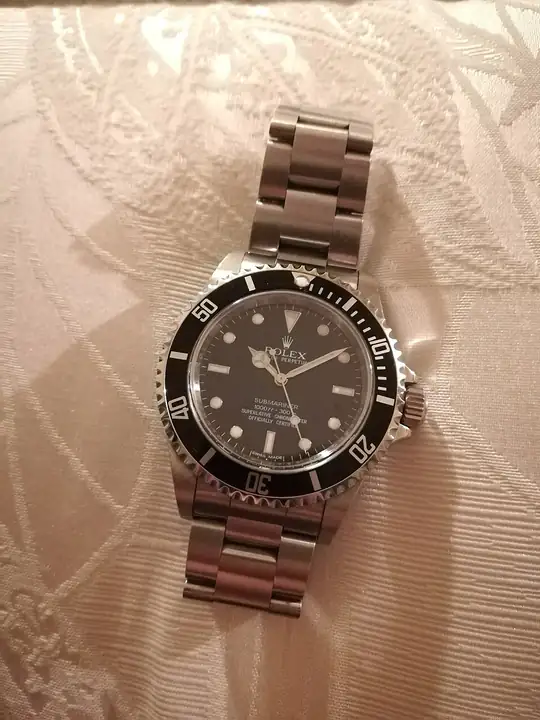
Rolex Submariner (ref. 124060, no date) High-end?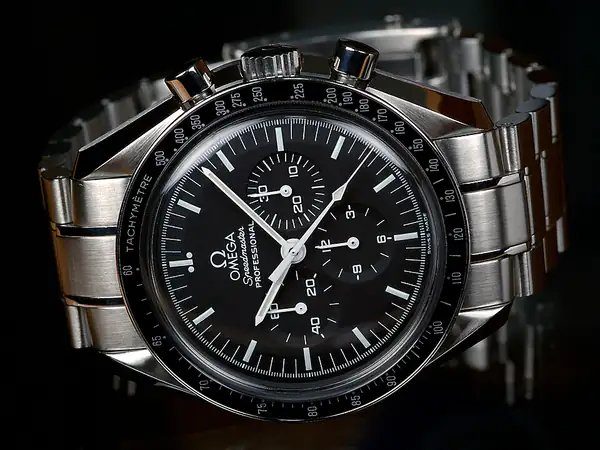
Omega Speedmaster Moonwatch Professional High-end?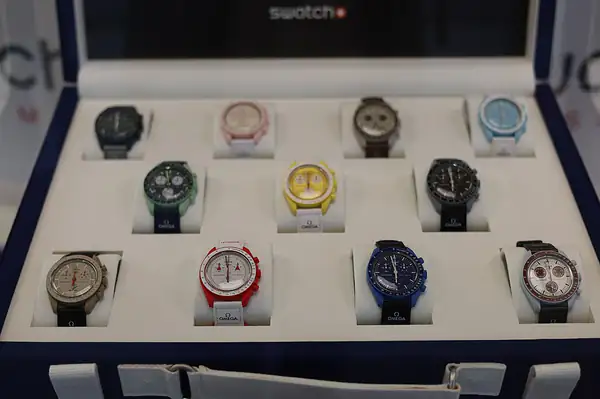
MoonSwatch 'Mission to the Moon' Mid-range?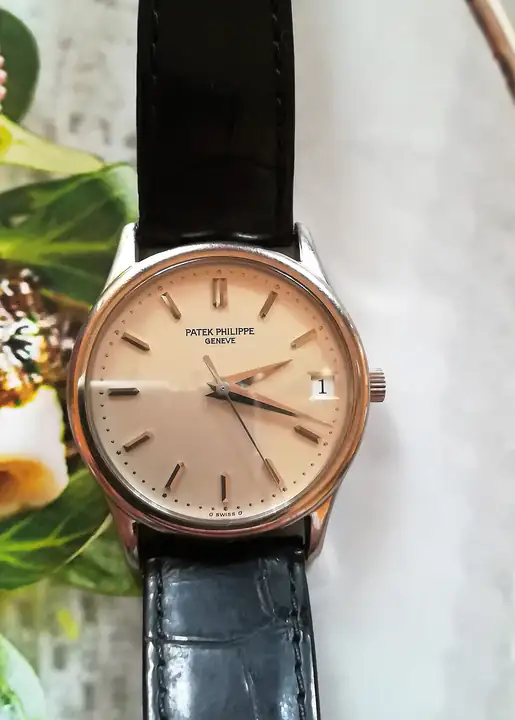
Patek Philippe Calatrava 6119G watch High-end?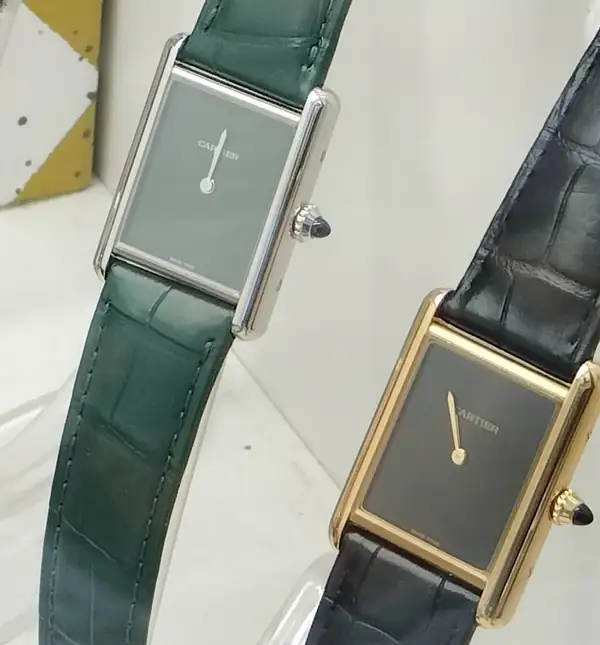
Cartier Tank Must watch (large, steel) Mid-range?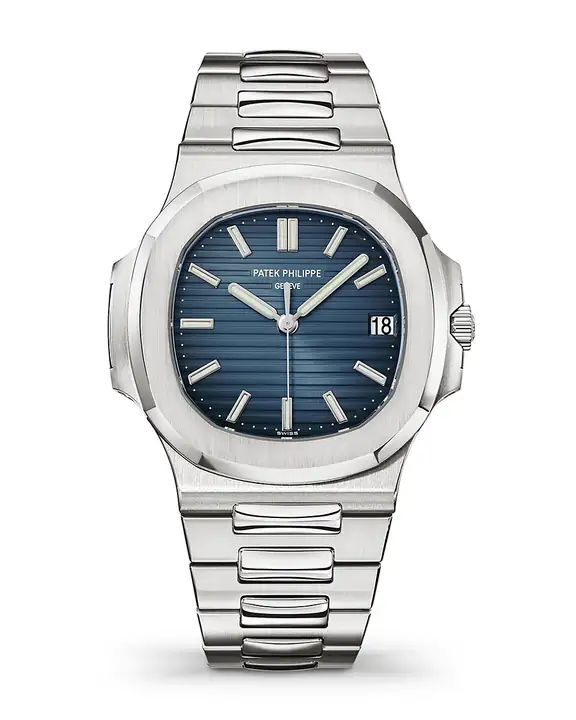
Patek Philippe Nautilus 5711/1A-018 'Tiffany' Luxury?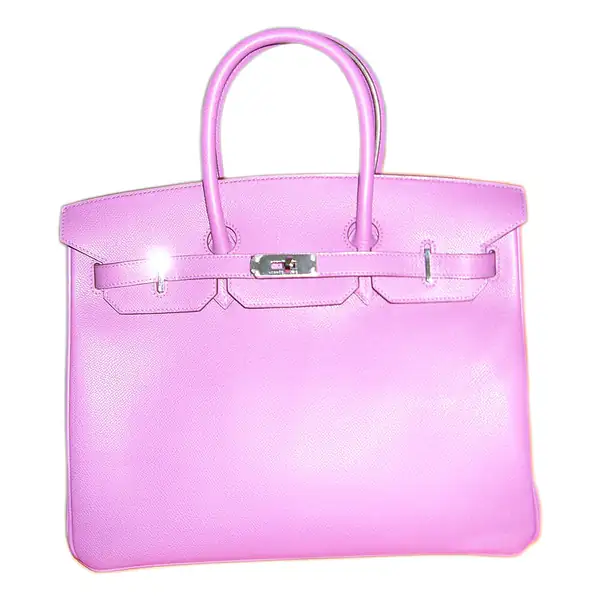
The original Hermès Birkin bag (Jane Birkin's) Luxury?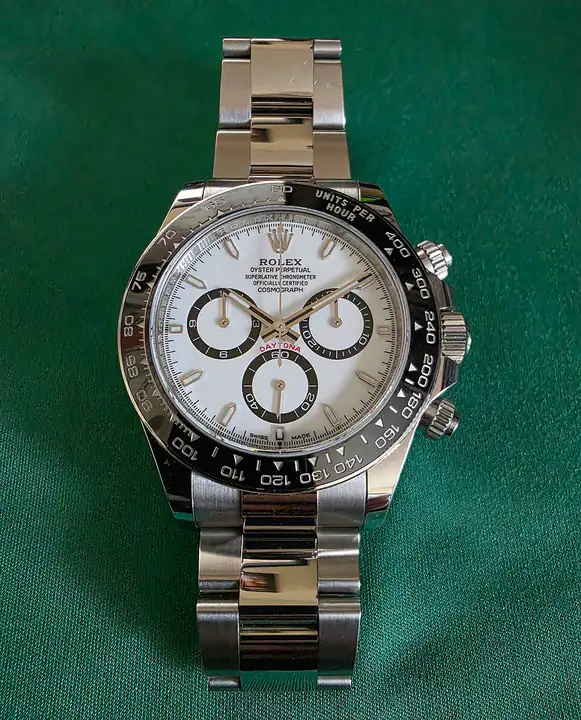
Paul Newman's own Rolex Daytona Luxury?