Auction records: what sends prices through the roof
By Thomas Hermet · October 22, 2026 · 5 min read
From Leonardo to a Ming cup, the biggest auction results in our catalogue and what drives them: rarity, provenance, bidding duels, fees and market cycles.
The top of the catalogue
Of the 693 prices in the PriceGuessr catalogue, more than 200 were set at auction, and they occupy almost the entire top of the rankings. The all-time record is still the Salvator Mundi attributed to Leonardo da Vinci, which sold for $450,312,500 at Christie's New York in November 2017. Next comes Gustav Klimt's Portrait of Elisabeth Lederer, sold for $236,400,000 at Sotheby's New York in November 2025. Among sales in dollars, next come three paintings from the collection of Microsoft co-founder Paul Allen, all sold in the same Christie's sale in November 2022: Cézanne's La Montagne Sainte-Victoire at $137,790,000, Van Gogh's Orchard with Cypresses at $117,180,000 and Klimt's Birch Forest at $104,585,000.
Always read an auction league table with the currency in view. Qi Baishi's Twelve Landscape Screens, sold for ¥931,500,000 (yuan) by Poly Auction in Beijing in December 2017, post the biggest number in the catalogue, roughly $140 million at the time. The Chenghua “Chicken Cup”, sold for HK$281,240,000 in April 2014, comes to about $36 million. And the Toyosu bluefin tuna, at ¥510,300,000 (yen) in January 2026, is worth something in the order of $3 million. A figure means nothing without its unit.
Rarity: things that barely exist
The first driver of a record is blunt: there isn't another one. The Chenghua cup is a small porcelain bowl about 8 cm across, painted with hens and chicks, and fewer than twenty are known worldwide, most of them in museums. The Mercedes-Benz 300 SLR Uhlenhaut Coupé, of which only two were built, changed hands for €135,000,000 in May 2022 at an invitation-only sale held at the Mercedes-Benz Museum in Stuttgart. No car has ever sold for more. The 1962 Ferrari 250 GTO, chassis 3765, one of a few dozen made, reached $51,705,000 in November 2023.
Rarity can also be a matter of what is left on the market. Edvard Munch's The Scream exists in four versions, but the 1895 pastel was the only one still in private hands; the others belong to museums in Oslo. It sold for $119,922,500 at Sotheby's in May 2012. When the rest of the supply is permanently off the market, the one available example soaks up all the demand.
Condition matters too, though less than you might think at the very top. The Salvator Mundi is a heavily restored panel whose attribution was long disputed by scholars. It still smashed every record: at that level, buyers pay for the name and the uniqueness more than for the freshness of the paint.
Provenance: paying for a story
Two identical objects can be worth wildly different sums depending on their past. A new Rolex Submariner lists at €9,800. Paul Newman's own Rolex Daytona, a gift from Joanne Woodward engraved “Drive Carefully Me” on the back, sold for $17,752,500 at Phillips New York in October 2017. The same goes for the very first Hermès Birkin, the prototype made for Jane Birkin, which fetched €8,582,500 at Sotheby's Paris in July 2025.
The story can be a film, a crime or a cause. Dorothy's ruby slippers, worn by Judy Garland in The Wizard of Oz, stolen in 2005 and recovered by the FBI in 2018, made $32,500,000 in December 2024. Dmitry Muratov's Nobel Peace Prize medal sold for $103,500,000 in June 2022, put up by the journalist himself to raise money through UNICEF for Ukrainian refugee children. That price has nothing to do with the gold in the medal; generosity drove it as much as the urge to own. The seller's name counts as well: a celebrated collection like Paul Allen's reassures bidders and draws the deepest pockets.
It only takes two bidders
An auction price does not measure what “the market” thinks an object is worth. It measures what the second most determined bidder was prepared to pay: the winner takes it one increment above their last rival. If only one buyer really wants the piece, it goes near the estimate. If two refuse to back down, the price can soar far beyond it.
The first official printing of the US Constitution, the last copy of that printing in private hands, is a textbook example. At Sotheby's in November 2021, billionaire Ken Griffin won it for $43,200,000, beating a crypto collective that had crowdfunded its bid from thousands of small online donors. Griffin went on to buy the “Apex” stegosaurus for $44,600,000 at Sotheby's in July 2024. Big fossils have become coveted trophies in their own right: “Stan” the T. rex had already gone for $31,847,500 at Christie's in October 2020.
Sometimes the stakes go beyond the object itself. The tuna from Toyosu's first auction of the year, a single fish of over 230 kg, was bought by the boss of a sushi chain. At that price, you are also buying an advertising campaign.
Fees, auction houses and timing
Published results almost always include the buyer's premium, a commission the auction house adds on top of the hammer price. For the Salvator Mundi, the hammer fell at $400 million; the $450,312,500 total includes the commission. The scale is tiered and often exceeds 20% on the first slice. You can see it even in small lots: an ammonite sold for $114.75 at Bonhams in May 2021 and a spider in amber at $318.75 match round bids of $90 and $250 plus exactly 27.5%.
The house's prestige matters: Christie's, Sotheby's and Phillips dominate the big international sales, Poly Auction the summit of Chinese art. But a masterpiece can surface anywhere. Cimabue's Mocking of Christ, a 25.8 × 20.3 cm panel found during a house clearance near Compiègne, sold for €24,180,000 in the small town of Senlis in October 2019. Very few works by this late 13th-century master survive: it was the rarity of the artist, far more than the fame of the saleroom, that made the price.
And then there is timing. Van Gogh's Irises sold for $53,900,000 in November 1987, a month after the stock market crash. The buyer, Australian businessman Alan Bond, had borrowed part of the money from Sotheby's itself, and the painting ended up at the Getty Museum. In May 1990, at the height of Japan's speculative bubble, a Japanese industrialist bought the Portrait of Dr Gachet for $82,500,000, then Renoir's Bal du moulin de la Galette for $78,000,000. Records tend to happen when money is plentiful.
Auctions are not just about records
The same machinery works at every scale. People have bought at auction a fragment of the Murchison meteorite for $140.25 in 2021, an entire town in Wyoming for $900,000 in 2012, and even the Lunokhod 2 lunar rover, still sitting on the Moon, for $68,500 in 1993. Its buyer has never been able to take delivery.
To test your instincts against gaps this dizzying, browse the most expensive items in the catalogue or take on the daily challenge.
Objects in this guide
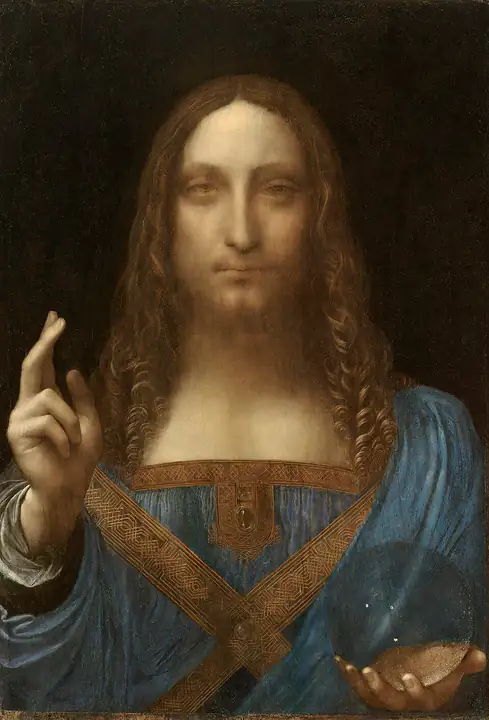
Salvator Mundi, Leonardo da Vinci (c. 1500) Priceless?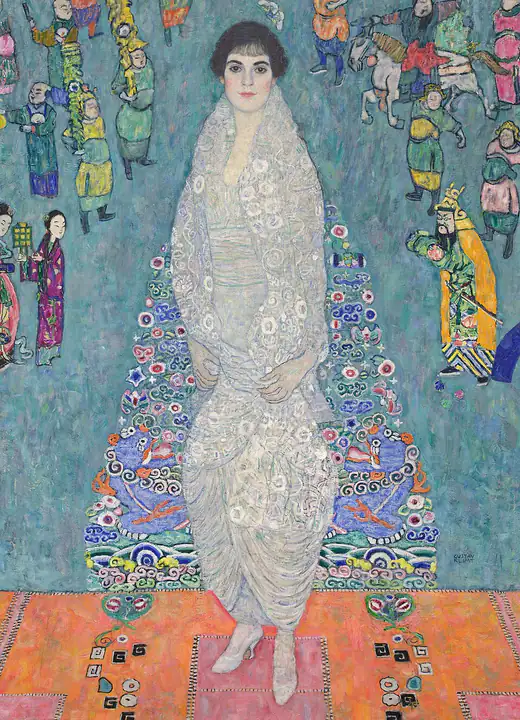
Portrait of Elisabeth Lederer, Gustav Klimt (1914-1916) Priceless?
Chenghua "Chicken Cup", Ming dynasty (1465-1487) Luxury?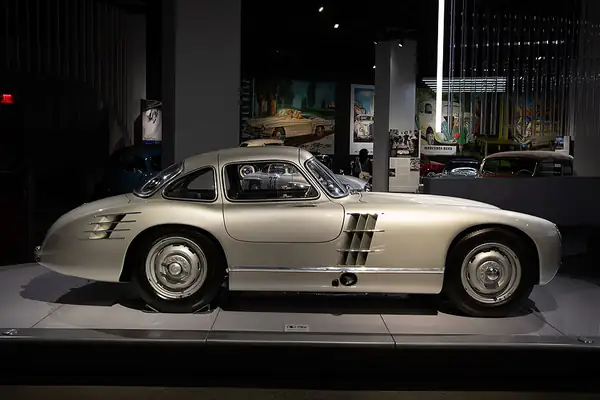
Mercedes-Benz 300 SLR Uhlenhaut Coupé (1955) Priceless?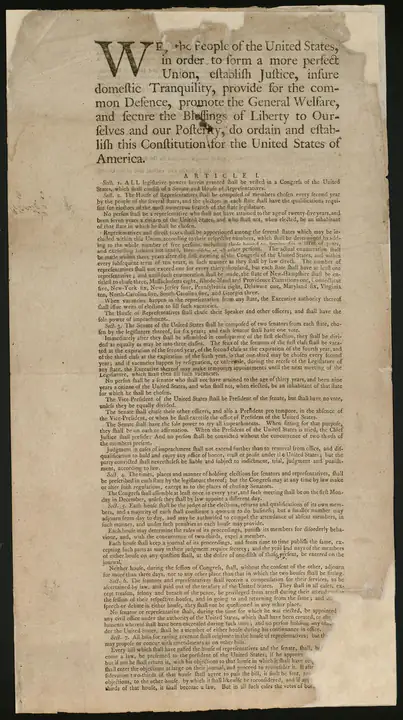
US Constitution, first official printing (1787) Luxury?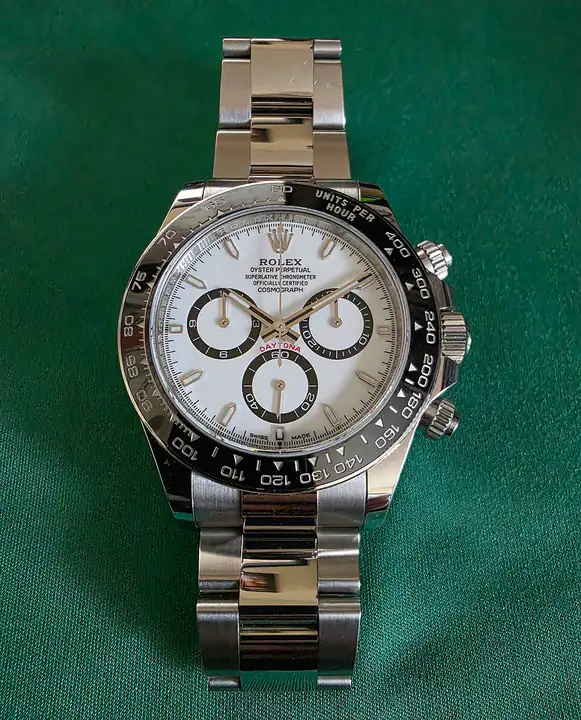
Paul Newman's own Rolex Daytona Luxury?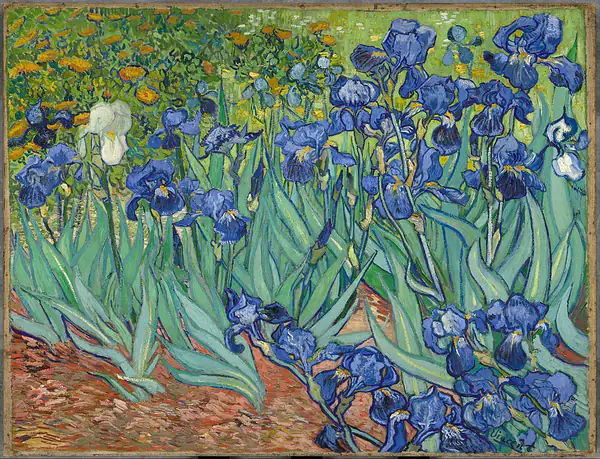
Irises, Vincent van Gogh (1889) Luxury?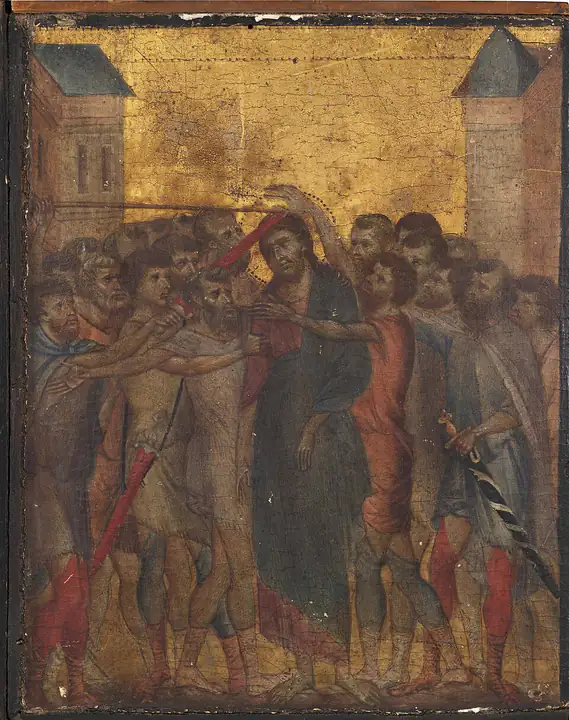
The Mocking of Christ, Cimabue (c. 1280) Luxury?